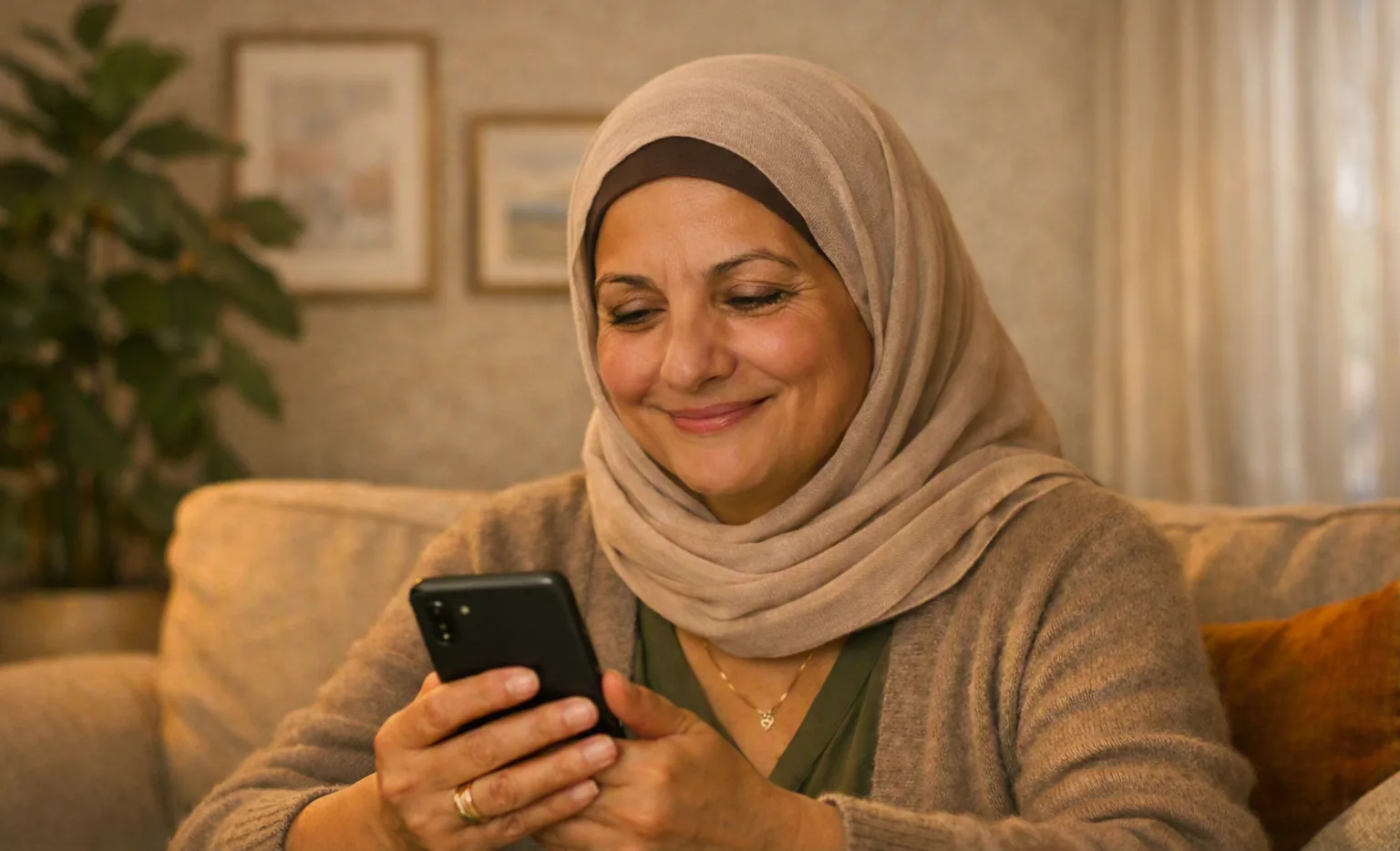
A text gets read in minutes; a call carries the warmth and the nuance. For a care business, the useful question is not “which one” – it is knowing when each wins, and layering them so nobody actually misses the message.
It is easy to be talked into going all-in on SMS. The general statistics are striking, and mostly true. But the general population is not your client list, and that gap is where good intentions leave people behind.
What the numbers say for SMS
Across business communication generally, text is hard to beat for reach and speed. Industry benchmarks put SMS open rates at around 90–98%, with most messages read within minutes, and people reply to texts far more readily than to calls – not least because roughly 80% of people won’t answer a call from a number they don’t recognise. Treat the exact percentages as indicative rather than gospel, but the pattern is real: a text is very likely to be seen, and seen quickly.
The care-sector caveat that matters
Those averages describe everyone. Your clients are not everyone. A meaningful share of older Australians don’t text, don’t check messages, or simply find a phone call warmer and easier to follow – and for a client living with vision or dexterity challenges, a text can be the harder channel, not the easier one. For many of the people you look after, a phone call is not the old-fashioned option; it is the right one. An SMS-only approach quietly writes those clients off.
Where each channel wins
- Phone call: warmth and nuance, older or vulnerable clients, anything sensitive, and any moment where you want to settle a reschedule in the conversation.
- SMS: speed and reach, a written record the client can re-read, people who never pick up calls, quick confirmations and reminders – and, crucially, letting a client reply in their own time.
The winning move is layering
The providers who reach the most clients don’t choose a side. They try the call first (or the client’s preferred channel), fall back to a text for anyone who doesn’t answer, and let people reply either way. It is not just intuition: industry data suggests that using calls and texts together, rather than calling alone, can lift answer rates several times over. Two channels, one message, nobody missed.
Two-way, not one-way
There is a big difference between a text that broadcasts and a text a client can answer. A one-way “your visit has changed” just moves the problem – the client still has to ring you back. Two-way SMS turns it into a conversation: “Thursday doesn’t work for me” comes back before the worker is at the door, while you can still do something about it. If you are going to text, make it a channel that talks both ways.
Two habits that make it work
- Record each client’s preference. Ask, note it, and honour it – call-first for some, text-first for others.
- Keep every message. Both directions, on the record – useful for continuity, and for showing later that the client was actually reached.
This is the logic NAS is built on: it calls first, falls back to a text for anyone who doesn’t answer, brings the replies back to one place, logs every message, and lets you set the channel per client. You get the reach of SMS without abandoning the clients for whom a call is the kinder choice.
Common questions
Should we just text everyone – isn’t it easier?
For a general audience, texting is fast and widely read. For a care client list it is not enough on its own: some older clients won’t see or use SMS. The safe approach is to layer – call first (or the client’s preferred channel), text as a fallback – so nobody is left out.
Is SMS reliable enough to depend on?
Read rates are very high, but not universal, and delivery can occasionally fail. Always pair it with a fallback and keep a record of what was sent, so “we texted them” is something you can actually stand behind.
Can clients reply to the texts?
With two-way SMS, yes – and that is the point. A message they can answer surfaces problems early. One-way texting just shifts the effort back onto the client.
Sources
- SMS benchmark reporting on open, read and response rates, and on answering unknown calls (industry data; treat exact figures as indicative).
- Analyses of combined call-and-text outreach versus calling alone.