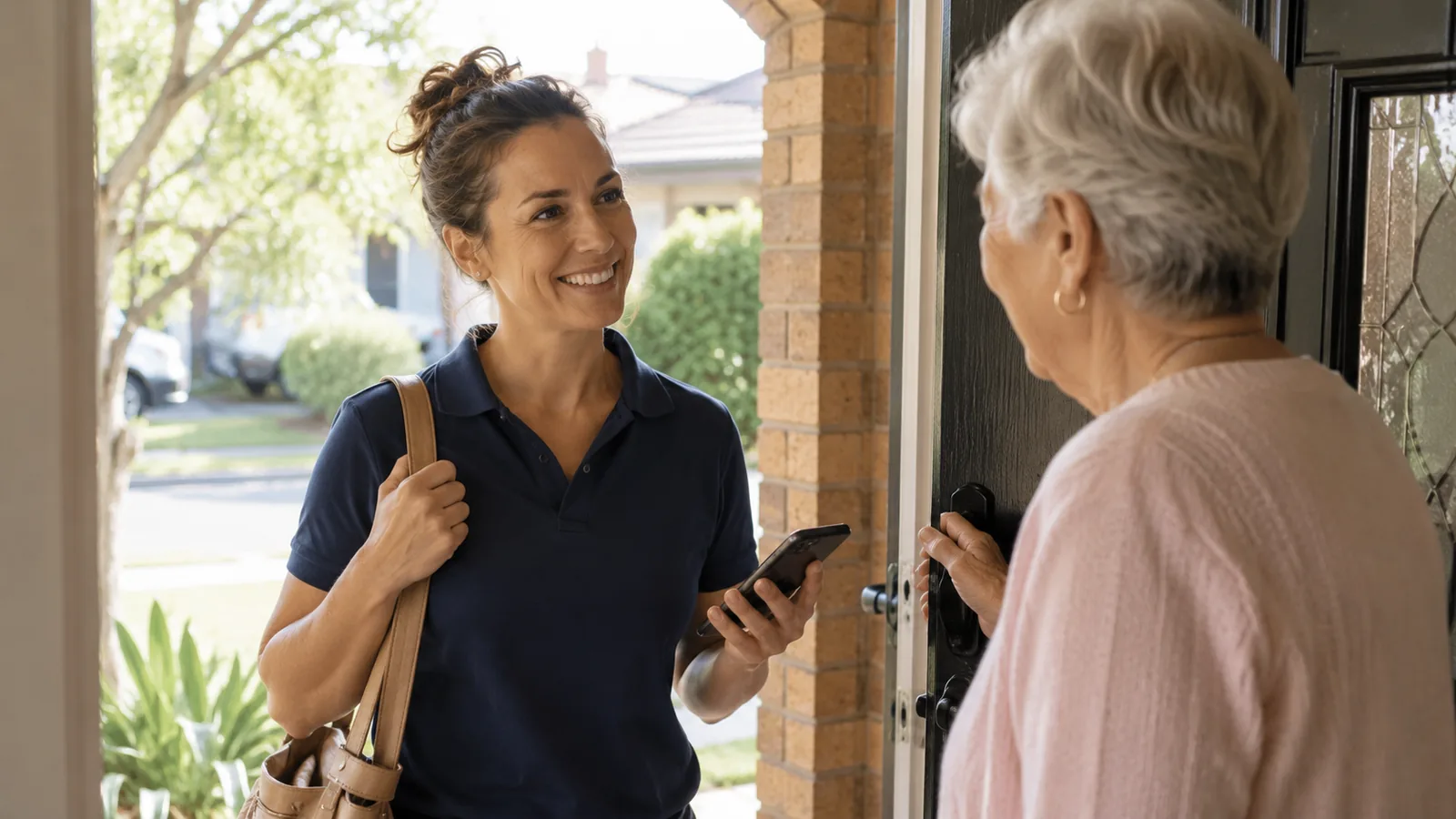
A missed visit is one of the most expensive things that can happen in a services business. The worker’s time is spent or wasted, the client is let down, the slot can’t be resold, and someone has to untangle it afterwards. Reliable, multi-channel notification has been shown to cut missed and no-show visits by roughly a third to a half – which makes this one of the few operational problems with a genuinely good return on effort.
Missed visits come in two flavours, and they need different fixes: the client who forgets or isn’t ready, and the visit your side has to change. Here is how to attack both.
1. Remind before, don’t just react after
Most client-side no-shows are forgetfulness, not indifference. A short reminder the day before – with a simple way to confirm or flag a problem – closes most of that gap. The key is that it’s automatic and consistent: a reminder that depends on a Care Partner remembering to send it is the first thing to fall over on a busy day.
2. Make it a two-way conversation
A reminder the client can’t reply to just moves the problem. When a client can respond – “actually, Thursday doesn’t work” – you find out before the worker is at the door, not after. Two-way messaging turns a broadcast into a conversation and surfaces changes early, while you can still do something about them.
3. When your side changes, tell everyone fast
The visits you cancel are the ones fully within your control to communicate well. The failure mode is speed: a worker calls in sick at 6:47am and the clients don’t hear until someone has worked down the list. Contacting every affected client at once – by call, with a text fallback for anyone who doesn’t pick up – is the difference between a client who reschedules calmly and a client left waiting.
The reduction in missed and no-show visits associated with reliable, multi-channel appointment notification.
Peer-reviewed research on appointment reminders and no-shows4. Reach the people who don’t pick up
One channel is never enough. A third of people won’t answer a first call; older clients may not check email; some only ever read texts. The providers with the lowest no-show rates don’t pick a channel – they escalate: call first, text if there’s no answer, and flag anyone still unreached for a human. Layering channels is what turns “we tried to reach them” into “they know.”
5. Keep the record
Every reminder, call and reply worth logging is also worth keeping. Beyond compliance, a communication record tells you which clients repeatedly miss visits and why – the pattern you need to actually fix the underlying problem instead of firefighting each instance.
Where automation earns its place
Notice how little of this is a judgement call. Reminding, confirming, escalating across channels, logging – these are exactly the consistent, repetitive tasks that break down when they depend on a busy person, and hold up perfectly when they don’t. Automating the mechanics frees your team for the part that does need a human: the client who is upset, the visit that genuinely needs rearranging.
Fewer missed visits is rarely about trying harder. It’s about building the reminding, reaching and recording into the system, so it happens every time – whether or not it’s the worst morning of the week.
Sources
- National Academies of Sciences, Engineering, and Medicine and peer-reviewed reviews of appointment reminders and no-show reduction.
- Support at Home operations and service delivery essentials, ShiftCare.